
How to IT Infrastructure Maintenance with Real-Time Monitoring Tools
Read Time:7 Minute, 12 Second
Modern businesses rely heavily on their IT systems to operate smoothly. Therefore, maintaining IT infrastructure has become a critical priority for organizations of all sizes. Real-time monitoring tools offer a powerful solution to keep systems running efficiently and prevent costly downtime.
Understanding IT Infrastructure Maintenance
IT infrastructure maintenance involves keeping all technology components in good working condition. This includes servers, networks, databases, and applications. Regular maintenance helps identify problems before they escalate into major issues.
However, traditional maintenance approaches often rely on scheduled checks and reactive fixes. This method can miss emerging problems that develop between inspection intervals. Additionally, manual monitoring consumes valuable time and resources that IT teams could use elsewhere.
Real-time monitoring tools have transformed how organizations approach infrastructure maintenance. These tools provide continuous oversight of system performance and health. Consequently, IT teams can respond to issues immediately rather than discovering them during scheduled reviews.
Benefits of Real-Time Monitoring
Real-time monitoring delivers numerous advantages for IT infrastructure management. First, it enables proactive problem detection. The system alerts administrators when metrics exceed normal thresholds. This early warning system prevents minor issues from becoming catastrophic failures.
Furthermore, real-time monitoring improves resource utilization. Organizations can track how their infrastructure components perform under different conditions. This data helps optimize resource allocation and reduce waste.
Another significant benefit is reduced downtime. When problems occur, monitoring tools immediately notify the relevant team members. Quick response times minimize service interruptions and maintain business continuity.
Moreover, real-time monitoring supports better decision-making. IT leaders gain insights into infrastructure trends and patterns. These insights inform strategic planning for upgrades and expansions.
Key Features of Effective Monitoring Tools
Not all monitoring solutions offer the same capabilities. Effective tools share several essential features that maximize their value.
Comprehensive coverage stands as the first critical feature. The tool should monitor all infrastructure components including hardware, software, and network elements. Complete visibility ensures nothing falls through the cracks.
Additionally, customizable alerts help teams focus on what matters most. The best tools allow administrators to set specific thresholds for different metrics. This flexibility reduces alert fatigue while ensuring important notifications get attention.
Integration capabilities also play a vital role. Monitoring tools should connect with existing IT management systems and workflows. Seamless integration streamlines operations and improves efficiency.
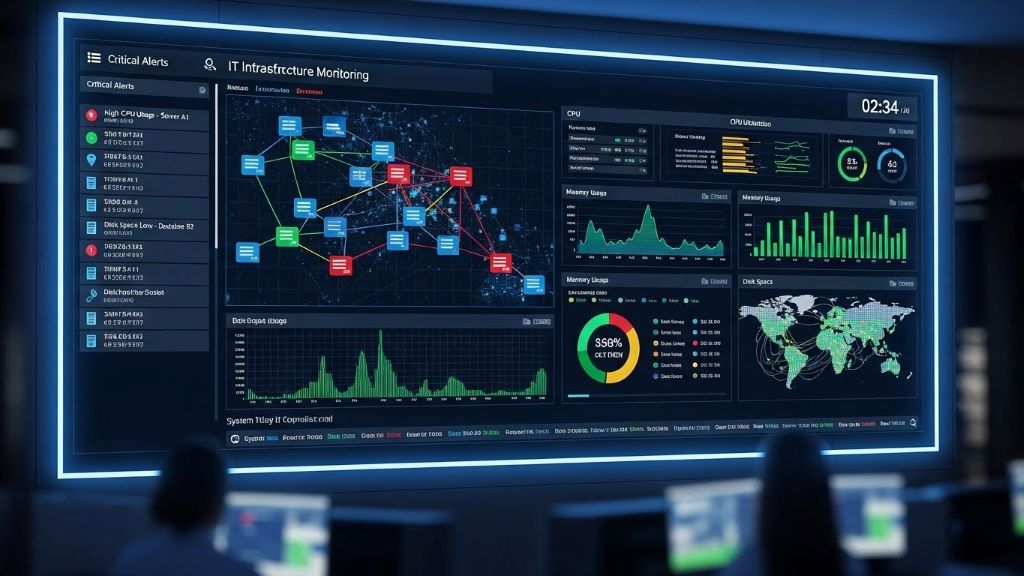
Real-time dashboards provide another valuable feature. Visual representations of system health help teams quickly assess current conditions. Easy-to-read displays enable faster problem identification and resolution.
Historical data analysis offers long-term benefits as well. Tools should store performance data for trend analysis and capacity planning. This information guides infrastructure development strategies.
Implementing Real-Time Monitoring
Successfully implementing monitoring tools requires careful planning and execution. Organizations should follow a structured approach to maximize results.
Start by assessing your current infrastructure. Document all components that require monitoring. This inventory ensures comprehensive coverage from the beginning.
Next, define your monitoring objectives. Determine which metrics matter most for your operations. Different organizations prioritize different aspects based on their specific needs.
Then, select appropriate monitoring tools. Research available options and compare their features against your requirements. Consider factors like scalability, ease of use, and cost.
After choosing tools, develop an implementation plan. Identify which systems to monitor first. A phased approach often works better than attempting everything simultaneously.
Configure alerts thoughtfully during setup. Set thresholds that balance sensitivity with practicality. Too many alerts overwhelm teams while too few miss important events.
Training represents another crucial implementation step. Ensure all relevant staff understand how to use the monitoring tools effectively. Proper training maximizes the value of your investment.

Best Practices for Infrastructure Monitoring
Following established best practices helps organizations get the most from their monitoring efforts. These guidelines come from years of industry experience.
Monitor continuously rather than intermittently. Real-time monitoring loses its effectiveness if gaps exist in coverage. Consistent observation catches problems whenever they occur.
Establish clear escalation procedures for different alert types. Teams should know exactly who to contact for various issues. Clear protocols speed up response times significantly.
Regularly review and update monitoring parameters. Infrastructure changes over time and monitoring configurations should evolve accordingly. Periodic reviews ensure continued relevance.
Document all incidents and responses thoroughly. This documentation creates a knowledge base for future reference. Teams learn from past experiences and improve their processes.
Additionally, integrate monitoring with automation where possible. Automated responses to common issues reduce manual workload. However, maintain human oversight for complex situations.
According to Forbes, the landscape of IT infrastructure monitoring continues to evolve with new technologies. Organizations must stay current with these developments to remain competitive.
Common Challenges and Solutions
Even with excellent tools, organizations face challenges in infrastructure monitoring. Understanding these obstacles helps teams prepare appropriate solutions.
Alert fatigue represents a common problem. Too many notifications cause teams to ignore or miss critical alerts. The solution involves fine-tuning alert thresholds and implementing intelligent filtering.
Another challenge involves tool complexity. Some monitoring platforms overwhelm users with features and options. Choosing user-friendly tools and providing adequate training addresses this issue.
Integration difficulties can also arise when connecting monitoring tools with existing systems. Working with vendors who offer strong technical support helps overcome integration obstacles.
Budget constraints sometimes limit monitoring capabilities. However, starting with essential features and expanding gradually makes monitoring more affordable. Many vendors offer scalable pricing models.
Measuring Monitoring Success
Organizations should track specific metrics to evaluate their monitoring program effectiveness. These measurements demonstrate value and identify improvement opportunities.
Mean time to detection shows how quickly the system identifies problems. Shorter detection times indicate more effective monitoring.
Mean time to resolution measures how long fixes take after problem identification. Improvements in this metric suggest better response processes.
System uptime percentage reflects overall infrastructure reliability. Higher uptime demonstrates successful maintenance practices.
False positive rates indicate alert accuracy. Lower rates mean better-configured monitoring parameters.
TechTarget provides additional guidance on selecting and evaluating IT infrastructure monitoring tools.
Future Trends in Infrastructure Monitoring
The monitoring landscape continues to advance with technological innovation. Understanding emerging trends helps organizations prepare for future developments.
Artificial intelligence increasingly powers monitoring tools. AI analyzes patterns and predicts potential failures before they occur. This predictive capability takes proactive maintenance to new levels.
Cloud-based monitoring solutions are becoming more prevalent. These platforms offer flexibility and scalability that on-premises systems cannot match.
Furthermore, automation integration continues to expand. Monitoring tools increasingly trigger automated remediation for common issues. This self-healing infrastructure reduces manual intervention requirements.
Conclusion
Real-time monitoring tools have become essential for effective IT infrastructure maintenance. These solutions enable proactive problem detection, reduce downtime, and optimize resource utilization. Organizations that implement comprehensive monitoring programs gain significant competitive advantages through improved reliability and performance.
Success requires selecting appropriate tools, implementing them thoughtfully, and following established best practices. Despite challenges like alert fatigue and integration complexity, the benefits far outweigh the obstacles. As technology continues evolving, monitoring capabilities will only become more powerful and essential.
Investing in real-time monitoring represents a strategic decision that pays dividends through enhanced operational efficiency and reduced infrastructure problems. Organizations that embrace these tools position themselves for long-term success in an increasingly digital world.
Frequently Asked Questions
What is the difference between real-time monitoring and traditional monitoring?
Real-time monitoring provides continuous, immediate visibility into infrastructure performance, while traditional monitoring typically involves scheduled checks at specific intervals. Real-time tools alert teams instantly when issues arise, whereas traditional methods may only detect problems during periodic reviews.
How much does real-time infrastructure monitoring cost?
Costs vary widely depending on infrastructure size, tool complexity, and deployment model. Small businesses might spend a few hundred dollars monthly, while large enterprises could invest thousands. Many vendors offer scalable pricing based on the number of monitored devices or users.
Can small businesses benefit from real-time monitoring tools?
Absolutely. Small businesses often lack extensive IT staff, making automated monitoring even more valuable. These tools help small teams manage infrastructure efficiently without requiring constant manual oversight. Many affordable options exist specifically designed for smaller organizations.
What metrics should I monitor for IT infrastructure?
Essential metrics include CPU usage, memory utilization, disk space, network bandwidth, application response times, and system uptime. Additionally, monitor security events, backup success rates, and database performance. The specific metrics depend on your infrastructure components and business priorities.
How often should monitoring configurations be updated?
Review monitoring configurations quarterly at minimum. However, update them immediately after significant infrastructure changes like new deployments, migrations, or architectural modifications. Regular reviews ensure monitoring remains aligned with current infrastructure and business needs.
Related Topics:

 0
0
 0
0

Average Rating