
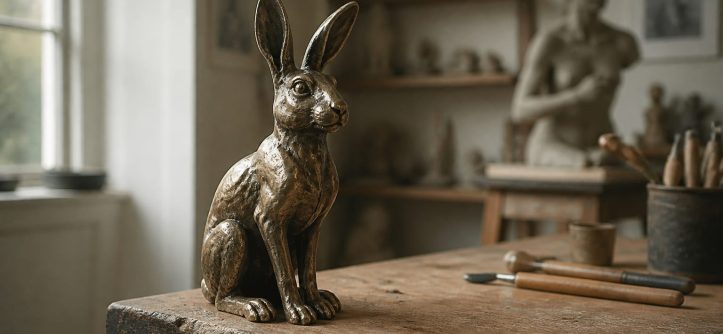
Commissioning your own Bronze Animal Sculpture can be a bigger decision than buying a finished piece from a shop, but is very rewarding when all goes well and you know what to expect at each stage.
Start With Your Subject And Reference
The more information you can give the sculptor about the subject of your bronze the better. He or she will want to see photographs of the subject from all angles as well as close-up shots of details such as the ears, any scars or markings and how the animal normally sits or lies. Bronze animals have been made for centuries and are one of the most popular subjects for bronze sculpture – from small domestic pieces to very large public ones.
Approve A Maquette First
It’s often easiest to make changes at the maquette stage as very little cost is involved to make changes such as altering the angle of the head or the set of the ear, once cast in bronze as a full sculpture these would be major alterations and could be very costly to put into production.
Understand The Casting Process
Bronze animal sculpture is generally made using the lost-wax process, in which a wax version of the proposed work is covered in ceramic shells, and then the wax is melted out of the shells and molten bronze poured into the resulting cavity. The website of the V&A Museum in London has a good description of the lost-wax casting process that has been used for centuries to make bronze sculpture. Making one-off pieces by this method is slow, and will take from a few weeks for small pieces to several months for very large ones, depending on a number of factors including the size and workload of the foundry. See also Bronze Animal Sculptures.
Get The Scale Right
When thinking about the space in which your bronze will reside, remember that the bronze will look very different depending on the scale at which it is viewed. If your bronze is intended to reside on a hallway table then it will need to be of a very different proportion to a bronze that is intended to reside in a garden border or even in a public space where it will view open sky at varying distances. Discuss the scale of your bronze with your sculptor early on, as this will influence both the scale of the maquette that you see prior to commission and the subsequent cost of the work.
Choose A Patina And Finish
The patina or surface of the bronze is one of the few elements of a bronze sculpture that you can choose. Traditionally, bronze is shown in a dark brown or black finish and is ideal for interior use. The verdigris green patina shows the bronze to be similar in colour to old garden statuary. The verdigris finish is particularly suitable for use outdoors as it is tolerant of the weather and will age well over time.
Budget For The Whole Project
It’s also important to remember that the price of the sculpture itself is only a part of the overall cost to you. A plinth or base, delivery and even the cost of someone to come and sit the sculpture for you (outdoor situations in particular need to be leveled and fixed to a firm footing) all need to be included in your budget. It’s best to get your sculptor to give you an overall cost for the commission.
A well-planned commission can take time to develop but it will be worth it. A sculpture of your beloved pet or favourite animal, made especially for you and your space, is far removed from an off-the-shelf generic bronze sculpture.


Leave a Reply