
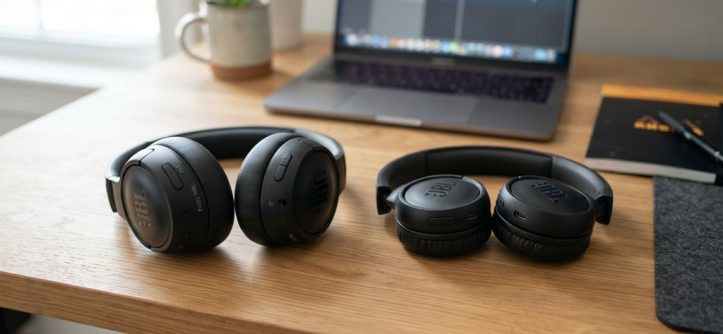
Finding a pair of headphones that stays comfortable and sounds great after hours of use is harder than it looks. If you’re exploring JBL’s popular Tune series, you’ve probably noticed several models with similar names and overlapping features. The real question isn’t just which one has the best bass—it’s which model can actually keep you comfortable and engaged through a full workday, a long flight, or an extended study session. This guide breaks down the key differences between JBL Tune models specifically for long listening sessions, helping you match the right pair to your habits. We’ll cover comfort, battery life, sound signature, and practical trade-offs so you can make a confident decision.
Key Takeaways
- Comfort for long listening depends more on headband design and ear cushion material than on raw specs—on-ear models like the Tune 510BT require more frequent break periods than over-ear options.
- Battery life claims are reliable for JBL Tune models, but features like ANC and high-volume listening will reduce real-world playtime by 15–20%.
- The sound signature across Tune models is consistently bass-forward, but the Tune 770NC and Tune 670NC offer clearer mids and better spatial separation than the budget-oriented 510BT and 520BT.
- Multipoint connection, now available on newer Tune models like the 720BT, can be a deciding factor if you switch between a laptop and phone during long sessions.
- For all-day wear, prioritize over-ear models with plush cushioning—the weight difference of 30–40 grams matters more than most spec sheets suggest.
Why “Long Listening” Changes How You Compare Headphones
Most spec comparisons focus on codec support or driver size, but long listening sessions introduce a different set of priorities. When you wear headphones for three or more hours straight, you start to notice things that don’t appear on the product page: clamping force distribution, heat buildup, cushion density, and how the weight feels after an hour. A pair that feels fine in a 15-minute store demo can become genuinely uncomfortable during a movie marathon.
This is where you need to compare JBL Tune models long listening because the series spans different form factors, not just different price points. The Tune 510BT and 520BT are on-ear designs, while the 660NC, 670NC, 720BT, and 770NC are over-ear. That distinction alone changes how you should evaluate them for extended use.
Comfort and Fit: The Primary Factor for Extended Sessions
If you plan to wear headphones for several hours at a time, comfort isn’t a secondary feature—it’s the primary requirement. No amount of sound quality or battery life matters if you need to take the headphones off every 45 minutes because your ears hurt.
On-Ear vs. Over-Ear Design
The JBL Tune 510BT and 520BT sit directly on your ears. This design is more portable and often lighter, but it concentrates pressure on a smaller surface area. After about 60–90 minutes, many users feel the pressure building, especially if you wear glasses. The over-ear models—660NC, 670NC, 720BT, and 770NC—surround your ears completely, distributing weight more evenly. If you’re going to sit in one place for hours, over-ear design is almost always the better choice.
Clamping Force Evolution
New headphones tend to clamp tighter because the padding hasn’t broken in yet. With JBL Tune models, the budget options like the 510BT use denser foam that takes longer to soften. The 770NC and 720BT use a softer, more yielding cushion that requires less break-in time. If you’re buying for immediate long sessions, consider the softer padding of the higher-tier models. If you don’t mind a week of frequent small adjustments, the 520BT will eventually loosen up.
Cushion Material and Heat
All Tune models use synthetic leather, but the quality varies. The 510BT and 520BT use a stiffer vinyl-like material that can trap heat. The 670NC and 770NC use a softer protein leather that breathes slightly better. In warm environments, this can mean the difference between a comfortable session and constantly shifting the headphones to vent heat. Ear pad replacement is also worth considering—the 770NC has user-replaceable ear cushions, which extends the lifespan of the headphones significantly.
Battery Life vs. Real-World Performance
JBL advertises impressive battery numbers across the Tune series—anywhere from 40 to 70 hours depending on the model. Those numbers are measured under specific conditions: moderate volume, ANC off (when applicable), and using the standard codec. In practice, you’ll get less. That’s not a JBL-specific issue; every manufacturer uses these test conditions. The important thing is knowing how much less you can expect.
Evaluating Battery Under Listening Conditions
If you listen at 70–80% volume with ANC enabled, you can expect roughly 80–85% of the advertised battery life. For the 770NC, that means about 55–60 hours instead of 70. For the 510BT, which has no ANC, you’ll get closer to the advertised 40 hours since there’s no additional power draw. If you use the wired connection (available on most models), battery life becomes irrelevant, but you lose wireless convenience.
Quick Charge Practicality
All current Tune models support fast charging: about 5 minutes of charge gives you roughly 2 hours of playback. This is genuinely useful for long listening sessions if you keep forgetting to charge the night before. It’s not a unique feature across the series, so it shouldn’t be your deciding factor, but it’s good to know you’re not stuck if the battery drains mid-session.
Sound Quality and Fatigue Resistance
Sound quality for long listening involves more than just frequency response. A headphone with overly aggressive treble can cause listening fatigue, even if it sounds impressive in short bursts. The JBL Tune series has a consistent house sound: boosted bass, slightly recessed mids, and smooth treble. That works well for long sessions because it’s an easy, non-fatiguing signature. But the implementation differs across models.
Bass Characteristics Across Models
The 510BT and 520BT emphasize mid-bass, which gives a punchy sound for pop and hip-hop but can mask vocals and instruments in complex mixes. The 770NC offers better bass extension with less bleed into the lower mids. This means you’ll hear the sub-bass more clearly, but dialogue and acoustic instruments remain intelligible. The 720BT sits between these two—more refined than the 520BT but not quite as detailed as the 770NC.
Micro-Detail and Spatial Separation
For long listening sessions, spatial separation matters more than raw detail. The 770NC presents a wider soundstage, meaning instruments are placed more distinctly in the mix. This reduces the effort required to follow complex audio—whether that’s a movie soundtrack, a podcast with multiple speakers, or a live concert recording. The 510BT and 520BT produce a more closed-in sound where elements can blur together. Over a two-hour session, that extra clarity reduces mental fatigue.
Wired and High-Resolution Options
The 660NC and 770NC support wired playback and handle high-resolution audio files better than the entry-level models. This matters only if you’re listening to lossless files on a compatible device. For streaming services like Spotify or Apple Music on standard quality settings, you won’t notice a significant difference. It’s worth noting that wired listening also bypasses the internal DAC, which can actually sound better on some devices—but it doesn’t help if you’re using a phone with no headphone jack.
ANC and Noise Isolation: The Hidden Factor in Endurance
Noise cancellation isn’t just about blocking sound—it affects how long you can listen comfortably. Without ANC, you’re tempted to raise the volume to mask background noise, which increases ear fatigue and reduces battery life. The Tune 660NC and 770NC have active noise cancellation; the 510BT, 520BT, and 720BT do not.
When ANC Matters for Long Sessions
If you’re listening in a quiet room, ANC is irrelevant. But on public transport, in a coffee shop, or near an air conditioner, adaptive noise levels will wear you out. The 770NC’s ANC effectively reduces low-frequency hums—engines, HVAC systems, road noise—without making you feel pressure in your ears. The 660NC has slightly weaker ANC but still handles consistent low-frequency sounds well. Neither will completely silence conversation, but that’s not the goal. The goal is reducing the urge to crank the volume, which lets you listen longer at healthier levels.
Features That Matter Most for Extended Use
Some features affect long listening sessions in ways that aren’t obvious at first glance. These are the details that distinguish a good pair for your specific routine.
| Feature | Relevance for Long Listening | Best Models |
|---|---|---|
| Multipoint Connection | Switch between laptop and phone without taking off the headphones | 770NC, 720BT |
| Wear Detection | Pauses audio when removed—saves battery and prevents missed content | 670NC, 770NC |
| App EQ | Adjust sound profile to reduce fatigue or boost clarity for specific content | 660NC, 670NC, 720BT, 770NC |
| Foldable Design | Easier storage when taking breaks; more portable overall | 510BT, 660NC, 770NC |
| Physical Controls | Touch controls can be accidentally triggered; buttons are more predictable | All Tune models use buttons |
Common Mistakes When Choosing a Tune Model

One common error is choosing the cheapest model and assuming the extra cost of higher-tier options isn’t justified. For short commutes, the 510BT or 520BT may be perfectly adequate. But for long listening, the differences in padding density, soundstage, and ANC become substantial. Another mistake is ignoring the weight. The 770NC weighs about 232 grams; the 510BT weighs around 160 grams. That doesn’t sound like much, but on-ear weight feels heavier than off-ear weight. An on-ear pair at 160 grams can feel more fatiguing than an over-ear pair at 230 grams because of how the weight is distributed.
A third mistake is assuming that newer models are always better. The 720BT is newer than the 770NC but lacks ANC. If noise isolation is critical for your listening environment, the older model is the better choice. Version number doesn’t equal feature superiority.
Choosing the Right JBL Tune Model for Your Listening Habits
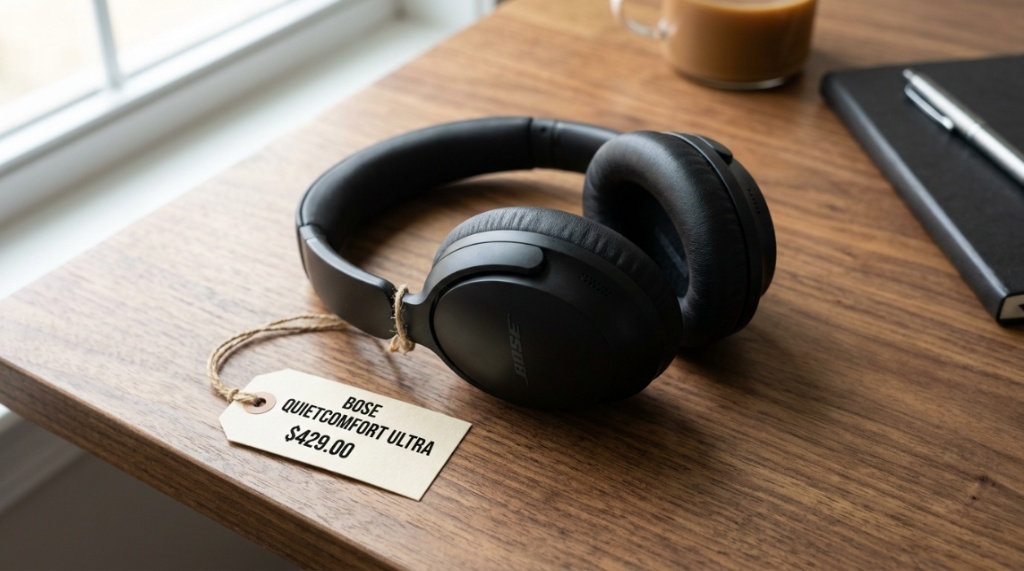
When evaluating JBL Tune headphones for long listening sessions, optimal selection hinges entirely on matching specific hardware capabilities to your daily routine rather than searching for a single “best” overall unit. For users prioritizing all-day wear during extended work sessions or commutes, over-ear noise-canceling options provide superior headband padding and ambient attenuation, whereas lightweight on-ear models prioritize extreme battery longevity and portability for active multi-taskers. If you are exploring alternate high-comfort options to compare against JBL’s lineup, review our comprehensive guide on best value bose headphones in texas to evaluate competing premium active noise-canceling models.
For All-Day Office or Study Sessions
Choose the Tune 770NC. It has the most comfortable padding, effective ANC, multipoint connection for switching between your phone and computer, and the clearest sound. The 70-hour battery means you can go nearly two full work weeks without charging.
For Frequent Travelers
The Tune 660NC is a solid choice because it’s lighter than the 770NC but still has ANC for flights. It folds flat, making it easier to pack. You’ll sacrifice some sound clarity and comfort compared to the 770NC, but if weight and packability matter more, this is the trade-off to make.
For Casual Listening on a Budget
The Tune 520BT is acceptable if you only listen for 60–90 minutes at a time. It’s inexpensive, sounds decent for the price, and has a long battery. Just know that on-ear comfort limits how long you’ll want to wear it.
For Those Who Want an Upgrade Without ANC
The Tune 720BT gives you the over-ear comfort, multipoint connection, and refined audio of the 770NC but at a lower price. If you never listen in noisy environments, skipping ANC saves you money without sacrificing the essential qualities for long sessions.
Frequently Asked Questions
How long can I comfortably wear JBL Tune headphones?
Over-ear models like the 770NC and 720BT can be worn comfortably for 4–6 hours before needing a break. On-ear models like the 510BT and 520BT typically start causing discomfort after 60–90 minutes, especially if you wear glasses.
Is ANC worth the extra cost for long listening sessions?
If you’re frequently in noisy environments, yes. ANC reduces the temptation to increase volume to mask background noise, which in turn reduces ear fatigue and preserves battery life. In quiet rooms, ANC provides no benefit.
Do JBL Tune headphones get uncomfortable with glasses?
The over-ear models (660NC, 670NC, 720BT, 770NC) are generally fine with glasses because the ear cushions surround the frames rather than pressing on them. The on-ear models (510BT, 520BT) press the arms of your glasses against your head, which becomes an issue after about an hour.
Which JBL Tune model has the best sound quality?
The Tune 770NC offers the most balanced and detailed sound in the series, with better bass extension and clearer vocal reproduction than other models. The 660NC is close, but its slightly narrower soundstage makes long listening sessions marginally more fatiguing.
Can I use JBL Tune headphones while charging?
Yes, all Tune models can be used while charging via the included USB cable. However, this is less convenient if you’re using the wired audio connection, as most models have a single USB port that handles both charging and audio, depending on the connection type.
Conclusion
When you compare JBL Tune models for long listening, the decision comes down to a few key factors: over-ear vs. on-ear design, the presence of ANC, cushion quality, and how you’ll use the headphones in real-world conditions. The Tune 770NC is the strongest overall choice for extended sessions thanks to its comfortable padding, effective noise cancellation, and clear sound. The 720BT is a smarter pick if you don’t need ANC, and the 660NC works well for travelers who prioritize portability. Budget-focused buyers can get by with the 520BT, but only if their sessions stay within the 90-minute range. Take stock of your typical listening environments and session lengths, then choose accordingly. A few extra dollars spent on the right model will pay off every time you put the headphones on.


Leave a Reply