
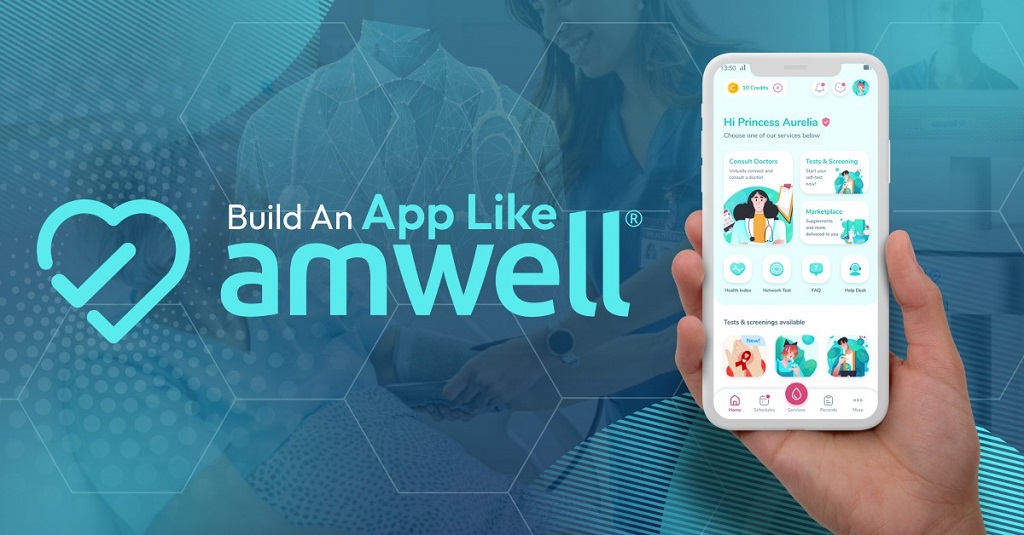
How to Develop Telemedicine App Like Amwell – Cost & Core Features
Read Time:10 Minute, 33 Second
Telemedicine apps bridge gaps in traditional healthcare. They enable remote interactions between patients and providers through digital tools. Developers design these platforms to handle video calls, secure messaging, and data sharing. As a result, users experience faster diagnoses and personalized treatment plans. Moreover, such apps reduce travel burdens, especially for rural communities.
Consider the evolution of these tools. Early versions focused on basic video chats. Today, advanced systems incorporate artificial intelligence for triage and analytics for outcomes tracking. Amwell exemplifies this shift by offering a unified platform that serves millions. Consequently, healthcare organizations adopt similar models to enhance efficiency.
Furthermore, these apps address broader societal needs. During global health crises, they proved vital for maintaining services. Now, with rising chronic conditions, demand intensifies. Developers must prioritize user-friendly interfaces and robust security. By doing so, they create apps that not only function well but also build trust.
In essence, telemedicine apps redefine care delivery. They empower patients with control over their health journeys. At the same time, providers gain tools for better decision-making. As you plan your project, keep these impacts in mind. This foundation sets the stage for replicating Amwell’s success.
What Makes Amwell a Benchmark for Telemedicine Development
Amwell stands out as a pioneer in virtual care platforms. Founded in 2006, the company builds a single technology ecosystem for payers, providers, and patients. Its approach integrates synchronous video visits with asynchronous messaging and automated programs. Therefore, users enjoy a cohesive experience across devices.
One key strength lies in its scalability. Amwell supports over 80 million members through partnerships with 50 health plans and 100 health systems. Developers admire how it handles high volumes without compromising quality. Additionally, the platform’s Amwell Medical Group employs about 2,300 active providers nationwide. This network ensures reliable, expert consultations.
Moreover, Amwell emphasizes personalization. Features like automated care programs monitor patients post-emergency visits. They send alerts, educate users, and close care gaps. As a developer, you can draw inspiration from this focus on engagement. It leads to lower readmission rates and cost savings for systems.
Integration forms another pillar. Amwell connects seamlessly with electronic health records like Oracle Cerner. This compatibility streamlines workflows for clinicians. In turn, it enhances patient experiences by pulling in prior data during visits. When building your app, prioritize such interoperability to stand out.
Finally, Amwell’s hybrid model blends virtual and in-person care. It supports group therapy, virtual nursing, and remote monitoring. These elements create a comprehensive ecosystem. By emulating this, your telemedicine app can address diverse needs effectively.
Core Features to Include in Your Telemedicine App

Building a telemedicine app requires thoughtful feature selection. Start with essentials that mirror Amwell’s offerings. These components ensure smooth operations and high user satisfaction. Below, you discover key areas to develop in detail.
Patient-Facing Features for Seamless Access
Patients expect intuitive tools that fit their daily lives. First, incorporate secure video calling. This allows real-time consultations without downloads. Users launch sessions directly from their phones, much like Amwell’s on-demand access.
Next, add appointment scheduling. An integrated calendar lets patients book slots with preferred providers. Automated reminders reduce no-shows. Furthermore, enable asynchronous messaging for follow-ups or quick queries. This feature supports text, photo, or video uploads securely.
Personal health records form a cornerstone. Patients upload vitals or symptoms via simple forms. AI-powered symptom checkers then guide them to appropriate care levels. As a result, they feel empowered and supported.
Additionally, include remote monitoring integrations. Connect with wearables to track heart rates or activity. Alerts notify providers of anomalies promptly. These tools promote proactive care.
Provider Tools for Efficient Workflows
Providers need features that save time and improve accuracy. EHR integration tops the list. Pull patient histories automatically to inform decisions. This mirrors Amwell’s clinician-friendly setup.
Secure video and chat functionalities enable group sessions or one-on-ones. Virtual whiteboards allow real-time annotations during exams. Moreover, prescription management streamlines e-prescribing to pharmacies.
Analytics dashboards provide insights into patient trends. Providers review outcomes, engagement rates, and satisfaction scores. Such data drives better practices.
Finally, workflow automation handles triage and alerts. AI assists in prioritizing cases, freeing clinicians for complex tasks.
Administrative and Payer-Focused Capabilities
Behind the scenes, robust admin tools ensure compliance and efficiency. Role-based access controls protect sensitive data. Billing integrations connect with insurance systems for seamless claims.
For payers, automated programs track high-risk groups. They deliver monitoring and interventions to cut costs. Amwell’s model shows how these reduce readmissions effectively.
Analytics for organizations highlight utilization patterns. Leaders use this to optimize resources.
Advanced Features with AI and Automation
Elevate your app with cutting-edge elements. AI-driven diagnostics offer preliminary assessments. Chatbots handle initial queries, routing complex ones to humans.
Blockchain secures data exchanges, enhancing privacy. Virtual reality simulations train providers or educate patients.
These additions future-proof your platform. They align with 2025 trends toward intelligent, connected care.
By including these features, your app rivals Amwell’s depth. Users benefit from comprehensive, secure experiences.
Step-by-Step Guide to Developing Your Telemedicine App
Launching a telemedicine app demands a structured approach. Follow these steps to navigate the process smoothly. Each phase builds on the last, ensuring a polished product.
Conduct Thorough Market Research
Begin by analyzing competitors like Amwell. Identify gaps in rural access or chronic care. Survey potential users to gauge needs. For instance, gather feedback on preferred features like AI triage. This step informs your unique value proposition. Additionally, review regulations such as HIPAA to avoid pitfalls early.
Define Requirements and Goals
Outline your app’s objectives. Do you target primary care or mental health? Specify user personas—patients, providers, admins. Create wireframes for key screens like booking interfaces. Moreover, set success metrics, such as user retention rates. This clarity guides every decision.
Assemble Your Development Team
Choose skilled professionals: UI/UX designers, frontend and backend developers, QA testers, and compliance experts. Consider outsourcing to specialized firms for telemedicine expertise. Ensure the team understands health tech nuances. Collaboration tools like Slack foster efficient communication.
Select the Right Technology Stack
Pick tools that support scalability and security. For frontend, React Native or Flutter enables cross-platform apps. Backend options include Node.js for real-time features. Databases like MongoDB handle patient data flexibly. Integrate cloud services such as AWS for hosting. This stack ensures reliability.
Design and Prototype the User Interface
Craft intuitive designs with clean navigation. Prototype video call flows and dashboards. Test with users for feedback. Iterate to enhance accessibility, like voice commands for elderly patients. A strong UI boosts adoption rates significantly.
Develop Core Functionalities
Build features iteratively. Start with MVP essentials: scheduling and video. Add integrations like EHR APIs. Implement security layers, including encryption. Use agile methods for quick adjustments based on testing.
Integrate Security and Compliance Measures
Embed HIPAA-compliant protocols from the outset. Conduct regular audits. Use multi-factor authentication for logins. This protects data and builds trust.
Test Rigorously Across Scenarios
Perform unit, integration, and user acceptance testing. Simulate high-traffic loads. Check for bugs in remote monitoring. Beta testing with real providers refines usability.
Launch and Monitor Performance
Roll out via app stores with marketing campaigns. Track analytics for engagement. Gather post-launch feedback to plan updates.
Scale and Iterate Based on Feedback
Expand with new features like VR. Monitor trends to stay relevant. Continuous improvement keeps your app competitive.
This roadmap turns vision into reality. Patience and adaptability yield the best results.
Technical Stack Recommendations for 2025
Choosing the right tech stack accelerates development and ensures longevity. In 2025, focus on frameworks that support AI and real-time interactions. Frontend leaders include React Native for native-like performance across iOS and Android. Flutter offers fast rendering with Dart, ideal for complex UIs.
For backend, Node.js excels in handling concurrent video streams. Python with Django provides robust data processing for analytics. Meanwhile, databases like PostgreSQL manage structured health records securely.
Cloud platforms such as AWS or Google Cloud host scalable infrastructure. They integrate AI services like TensorFlow for triage tools. Communication protocols, including WebRTC, power low-latency video calls.
Security tools are non-negotiable. Implement OAuth for authentication and SSL for encryption. DevOps practices with Docker and Kubernetes streamline deployments.
This stack aligns with telemedicine demands. It supports growth while maintaining performance.
Factors Influencing Development Costs
Costs vary based on several elements. Complexity drives expenses—basic apps with core features cost less than AI-enriched platforms. Team location affects rates; onshore developers charge more than offshore ones, but proximity aids collaboration.
Feature scope plays a huge role. Adding EHR integration or remote monitoring increases efforts. Platform choice matters too—cross-platform development saves over native builds.
Timeline pressures can inflate budgets. Rushed projects demand overtime. Compliance testing adds layers, ensuring regulatory adherence.
Ongoing maintenance factors in post-launch. Updates for new OS versions or security patches sustain the app.
By evaluating these, you budget wisely. Prioritize MVP to launch affordably, then scale.
Challenges in Telemedicine App Development and Solutions
Development faces hurdles, but solutions exist. Data privacy tops concerns. Breaches erode trust. Counter this with end-to-end encryption and regular audits. Blockchain adds tamper-proof logs.
Integration issues arise with legacy systems. Use APIs and middleware for smooth connections. Pilot tests reveal incompatibilities early.
User adoption lags without intuitive designs. Conduct usability studies. Offer tutorials and onboarding.
Regulatory compliance evolves quickly. Partner with legal experts. Stay updated via industry forums.
Scalability tests limits during peaks. Cloud auto-scaling handles surges. Load testing prepares for growth.
Addressing these proactively ensures success. Amwell’s resilience inspires such foresight.
Real-World Case Studies: Lessons from Successful Apps
Examine Teladoc’s expansion. It integrated AI for faster triages, boosting consultations by 40 percent. Developers replicated this by prioritizing predictive tools.
Doximity focused on provider networks. Its secure messaging cut response times. This case highlights community-building features.
In rural India, Practo scaled via multilingual support. Localized content drove 30 percent uptake. Adapt to regional needs for impact.
These stories reveal patterns. Invest in user-centric iterations. Measure ROI through engagement metrics.
Emerging Trends Shaping Telemedicine in 2025
Innovation propels telemedicine forward. AI integration leads, with chatbots and diagnostics enhancing efficiency. Remote patient monitoring expands via wearables, enabling chronic disease management.
Hybrid care models blend virtual and in-person services. This flexibility suits diverse preferences. Interoperability standards like FHIR unify data flows.
Generative AI personalizes plans, predicting needs from histories. Blockchain secures transactions, fostering trust.
Virtual reality aids therapy sessions, immersing users in calming environments. These trends demand adaptive development.
Embrace them to future-proof your app. Stay agile amid rapid changes.
Related Topics: Fix Low Click Response on Reels
Conclusion
Developing a telemedicine app like Amwell transforms healthcare access. You explored core features such as secure video calls, AI triage, and EHR integrations. The step-by-step guide outlined market research to launch strategies. Cost factors like complexity and compliance influence budgets, while technical stacks ensure scalability.
Challenges like privacy yield to proactive solutions. Case studies and 2025 trends, including hybrid models and AI, inspire innovation. Ultimately, your app can deliver value by prioritizing users.
Ready to build? Assemble your team today. Start with an MVP prototype. Launch a platform that connects and heals—your impact awaits.
Related Topics: Fix Low Click Response on Reels
FAQS
What Are the Essential Core Features for a Telemedicine App?
Essential features include secure video consultations, appointment scheduling, and patient portals for records. AI symptom checkers and remote monitoring add value. These elements ensure comprehensive care, much like Amwell’s ecosystem.
How Long Does It Take to Develop a Telemedicine App Like Amwell?
Development timelines range from six to twelve months for an MVP. Factors like team size and feature complexity influence speed. Iterative testing extends phases but improves quality.
What Technology Stack Should I Use for Telemedicine Development?
Opt for React Native on the frontend for cross-platform reach. Node.js backend handles real-time data. Cloud services like AWS support scalability and security integrations.
How Can I Ensure HIPAA Compliance in My App?
Implement encryption for all data transmissions. Conduct regular audits and use compliant hosting. Train teams on protocols to safeguard patient information effectively.
What Are the Future Trends in Telemedicine Apps?
Trends feature AI-driven personalization and hybrid care. Wearable integrations and VR therapy emerge strongly. These advancements promise more proactive, engaging health solutions.
References
- https://pmc.ncbi.nlm.nih.gov/articles/PMC11333813/
- https://ce.mayo.edu/sites/default/files/Telehealth-Whitepaper-Importance-of-Telehealth-in-the-Post-COVID-Era_0.pdf
- https://www.amwell.com/
- https://www.telemed2u.com/blog-news/best-telemedicine-software-in-2025-transform-your-healthcare-practice

 0
0
 0
0

Average Rating