
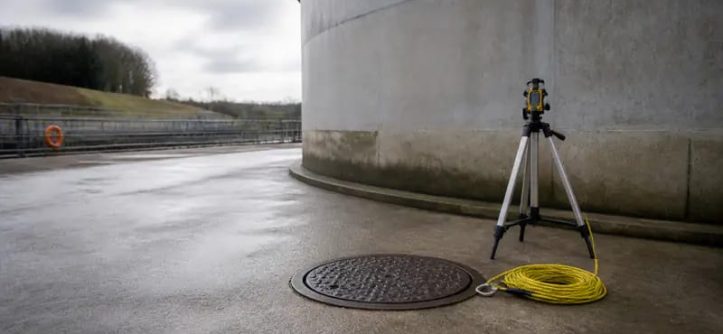
A tank, vessel, pit, duct or sewer can look harmless enough from the outside of a confined space but there can be hidden dangers within. Firstly, one must recognise what dangers there are.
Oxygen Levels Can Swing Both Ways
The dangers posed by excessive oxygen are commonly overlooked but present serious risk of fire and explosion. As air deteriorates, the percentage of oxygen in the atmosphere can rapidly drop. Healthy air contains approximately 21% oxygen. Below 19.5% a person may start to lose coordination and can lose consciousness within minutes. Above 23.5% normal air can pose serious fire and explosion risk. The air can deteriorate through rusting of metal, decomposing organic material, or nearby welding work.
Gases That Build Up Without Warning
Toxic gases, such as hydrogen sulphide found in sewage, or flammable gases, such as methane produced by the decomposition of organic matter, can find their way into a space that appears to be empty. They can come from the deteriorating contents of a tank and may have no smell at all. The gases can enter a space through a nearby process such as a pipe.
The Risk Of Being Engulfed
Free-flowing materials, such as grain, sand, powder or slurry, can behave like liquids when disturbed and so can hide their dangers. People entering spaces containing these types of materials can appear to be on solid ground only to be pulled under by the material shifting beneath them. The pressure exerted by the material as it engulfed a person could make rescue with standard equipment very difficult and therefore such materials are underestimated dangers. See also Confined Space Rescue.
Awkward Spaces And Live Equipment
A confined space is often narrow with bends and drops and can be difficult to move around in. A confined space may also contain live equipment such as mixers, augers, pumps and electrical fittings, which must be isolated before entry to the space. This can be done by switching off and isolating equipment but still must be checked to ensure it is de-energized before entry to the space.
Heat, Cold And Poor Air Flow
Most confined spaces do not have natural ventilation. Areas near machinery can quickly heat up, such as the top of a metal tank left in the sun. A person could suffer from heat exhaustion within a short space of time. Other confined spaces are underground and can be very cold and damp. Suffering from rapid chilling affects a person’s judgment and could increase the risk of other hazards.
Conditions Change After You’ve Checked
Remember a space which has been checked for risks before entry is not necessarily safe for the duration of the work. A space that was safe at the start of a shift could change for the worse within a few minutes. The Health and Safety Executive for Northern Ireland gives guidance on the hazards associated with working in confined spaces.
Be under no illusion, every confined space is potentially deadly and can change within the blink of an eye!


Leave a Reply